AI Receptionist
AI Receptionist for Commercial HVAC: Contracts, Dispatch, and Follow-Up
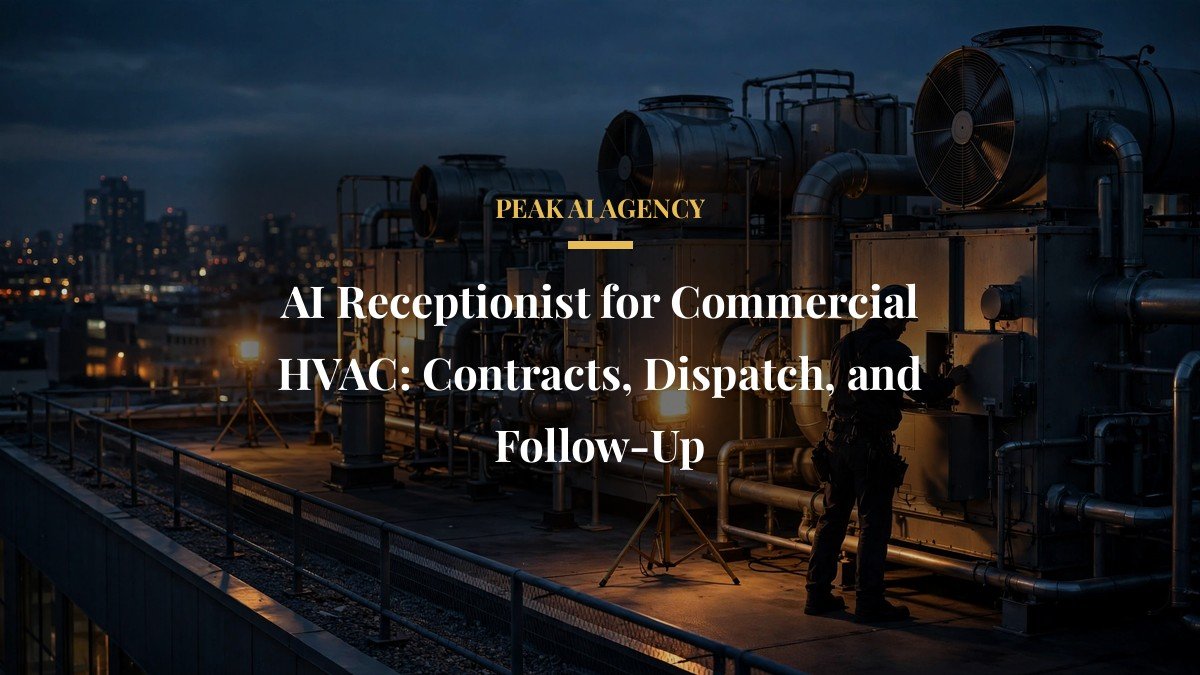
Residential HVAC gets the attention because the calls are dramatic: no heat at 2am, no AC in a heatwave. Commercial HVAC is quieter and more valuable. A property manager with a rooftop unit down, a restaurant with a walk-in cooler acting up, an office building negotiating a maintenance contract. The tickets are bigger, the relationships are longer, and the phone still rings while your techs are on roofs.
Commercial work runs on responsiveness and paperwork. Facility managers and property managers choose vendors they can reach. When the building is uncomfortable, they call the contractor who picks up, not the one with the better brochure. An AI receptionist for commercial HVAC makes sure you’re the one who picks up, and handles the contract and dispatch logistics that eat your office staff’s day.
The calls commercial shops actually get
Emergency service calls from facility managers: a unit is down, a zone isn’t cooling, there’s a strange smell from the vents. These callers need a tech dispatched, and they need a time window they can tell their tenants. The AI triages the urgency, collects the building address, unit location, access instructions, and contact on site, then dispatches per your on-call rotation or books the next available slot.
Maintenance contract inquiries: property managers shopping for quarterly or annual service agreements. These are high-value, slow-burn sales. The AI gathers the building details, number and type of units, current provider situation, and contract timeline, then schedules a site walk or an estimator visit. It doesn’t quote contract pricing blind. It qualifies the opportunity so your salesperson walks in prepared.
Repeat service scheduling: filter changes, seasonal changeovers, inspection visits under existing contracts. Routine, schedulable, and perfect for AI handling end to end. It books the visit, confirms access requirements, and sends reminders.
Parts and warranty questions: is this covered, how long will the part take, what’s the warranty on the new install. The AI answers from your warranty terms and install records, and escalates when it doesn’t know.
Why commercial is a better fit than residential for AI answering
Residential calls are emotional and urgent. Commercial calls are procedural. Facility managers want a ticket number, a time window, and a tech who shows up. They don’t need sympathy. They need competence and a paper trail. AI receptionists are good at exactly that: structured intake, consistent information, and follow-through.
The contract side is where the money is. A single commercial maintenance agreement can be worth dozens of residential service calls, and the sales cycle involves multiple touchpoints: initial inquiry, site walk, proposal, follow-up, signing, scheduling. An AI receptionist keeps that pipeline warm. It follows up on proposals that went quiet, schedules the site walks, and makes sure no inquiry sits unanswered for three days while you’re finishing an install.
Dispatch without the chaos
Commercial dispatch has more moving parts than residential. Multiple techs, multiple sites, access constraints, tenant coordination. The AI doesn’t replace your dispatcher. It feeds the dispatcher clean tickets: problem description, site contact, access notes, priority level, and photos or details the caller provided.
For after-hours commercial emergencies, the AI applies your escalation rules. A restaurant with a dead walk-in at 9pm is a real emergency and goes to the on-call tech immediately. An office with a slightly warm zone at 8pm can wait for morning, and the AI books it as the first call. Getting this triage right is what separates a useful AI receptionist from an expensive message-taker.
What to check before you buy
- Multi-site awareness. It needs to handle callers with portfolios: one property manager, five buildings, different units and contract terms at each. Make sure it keeps sites straight.
- Contract knowledge. It should know which callers have active maintenance agreements, what the agreement covers, and what bills separately. Nothing annoys a contract customer like being quoted for covered work.
- Estimator scheduling. Site walks and quotes are the sales engine. The AI should book them directly into your estimator’s calendar with the qualifying details attached.
- Proposal follow-up. Ask whether it can follow up on open quotes automatically. Unfollowed proposals are the quietest revenue leak in commercial HVAC.
- Integration with your dispatch board. Tickets should land in whatever you use, ServiceTitan, Housecall Pro, a spreadsheet, with all the intake fields filled. Manual re-entry kills the time savings.
Commercial HVAC rewards the contractors who are easiest to do business with. Facility managers have vendor lists, and they reorder them based on who answers, who shows up, and who follows through. An AI receptionist makes you the contractor who always answers, with clean tickets and contracts that never go quiet. The same seasonal and dispatch pressures exist on the residential side, covered in our guides to HVAC dispatch during seasonal spikes and AI receptionists for HVAC companies.

I write the agents that run on clinic phone lines and inboxes: the conversation engine and the booking logic behind them, plus the integrations with Pabau, Fresha and Phorest. Everything here comes out of systems we have actually shipped, not a content plan.