AI Receptionist
AI Receptionist for HVAC Companies: Dispatching Techs and Surviving Seasonal Call Spikes
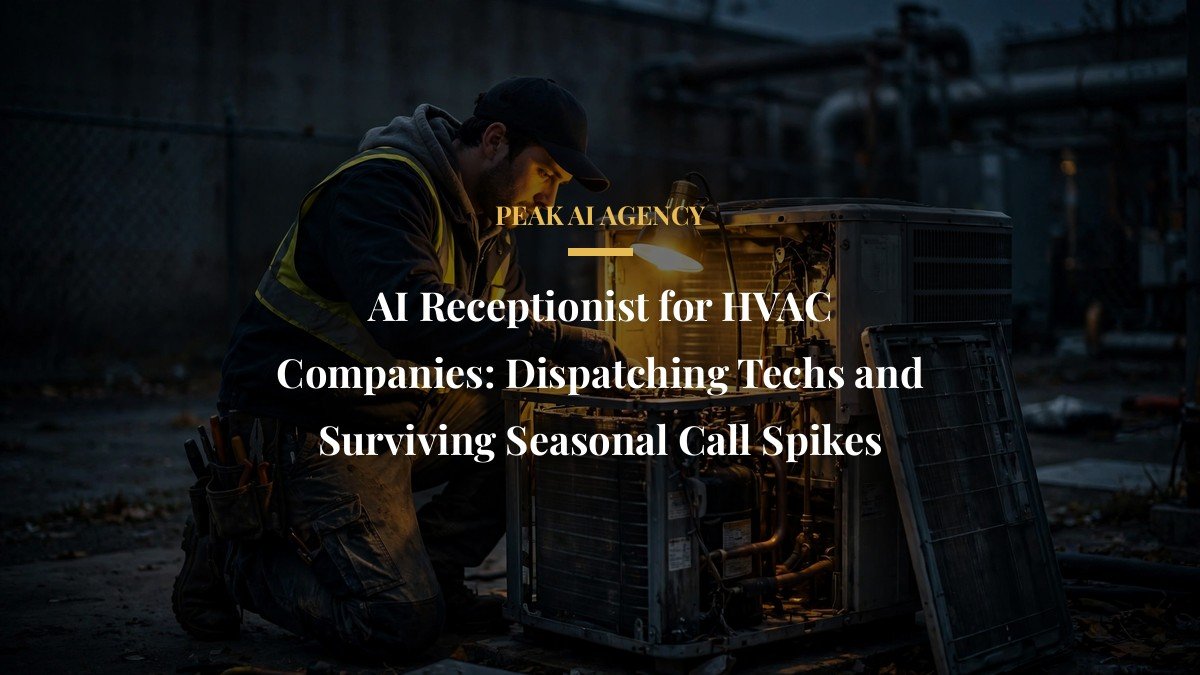
When the first real heat wave hits, everything about your phone changes. The calls that used to be tune-ups and filter questions become no-cool emergencies, and they all arrive in the same afternoon. Your techs are in attics. Your office person, if you still have one, is drowning. Voicemail fills up, callbacks lag by a day, and by the time you return a call the homeowner has already booked your competitor.
An AI receptionist does not fix any of this by itself. What it does is take the calls you cannot reach, sort them by urgency, and get the right information to the right tech fast. This post covers how that actually works for an HVAC shop, what to set up before summer, and where the limits are.
What goes wrong with phones during a spike
On a normal week your call mix is spread out: maintenance reminders, the occasional repair, a quote request for a system replacement. During a sustained heat wave, the mix flips. Almost everything is urgent or close to it. Callers describe the same symptoms in different words, callback times stretch, and the person answering the phone, human or otherwise, has to make a fast judgment: does this need a tech today, or can it wait two days?
Most small shops handle this with whoever is closest to a phone, which is nobody. The tech on the roof cannot take calls. The owner is driving. So calls go to voicemail, and voicemail during a spike is where jobs die. People with no AC at 95 degrees do not leave thoughtful messages and wait patiently.
An AI receptionist picks up on the first ring, every time, including at 11pm when the capacitor fails and the house is getting warmer. That part is simple. The useful part is what it asks next.
Triage before dispatch: the part that saves your schedule
The biggest lever is not answering more calls, it is sorting them. A decent setup asks a short series of questions: is the system running at all, is there airflow but no cooling, is there a burning smell or water leaking. The answers map to your rules. No cooling with vulnerable people in the house goes to the top. A strange noise but the system still runs gets the next available slot. A tune-up request during a heat wave gets scheduled for after the spike with a clear explanation.
This only works if you write the rules down. You know your triage logic already; the AI just needs it in plain language. Most shops need about a page of it: which symptoms count as same-day, which get next-day, which get offered the first slot after the rush. If you do seasonal demand planning, you probably already think in these terms: handling seasonal call spikes without hiring temps covers the staffing side of the same problem.
One honest limit: an AI receptionist cannot diagnose a system over the phone, and it should not try. It can collect symptoms and quote a diagnostic visit fee. It cannot tell a homeowner their compressor is shot. Set that expectation in the script and in your own head.
Getting the right tech to the right call
Dispatch is where small HVAC shops lose hours. The AI collects the address, the symptom, and the urgency, then routes by your rules: emergency calls go to the on-call tech immediately, warranty callbacks go to whoever installed the system, quotes for replacements go to the sales tech with the longest availability.
If you run an on-call rotation, the AI follows it. You give it the schedule, and urgent calls ring whoever is actually on call, not everyone. That alone cuts the midnight group-text chaos most shops deal with. Dispatching urgent calls to the right tech walks through the routing logic in more detail.
The handoff matters too. After an urgent call, the AI should text the tech the full picture: name, address, symptom, access notes, callback number. A text that says “no-cool, 82-year-old at home, side gate unlocked” gets a tech moving. A text that says “call came in” does not.
Estimates and quote requests during the rush
During a spike you will get replacement quotes mixed in with repairs. Someone whose 15-year-old unit died in July wants a price on a new system, and they want it now. The AI cannot walk a roof or size a system, so it should not quote. What it can do is capture the details that let you quote later: unit age, tonnage off the nameplate, fuel type, whether they want like-for-like or a full redesign.
Book the estimate appointment on the spot. Replacement quotes are high-value calls and they leak fast. If the AI books the site visit while the caller is still on the phone, you keep the job in your pipeline instead of in a voicemail inbox. Follow up on every quote within a day or two; quote follow-ups that win the job back is worth reading before your next busy week.
What it cannot do on a dispatch board
An AI receptionist is not a dispatcher with judgment. It will not notice that you have three techs booked in the same neighborhood and slide a fourth call in to save drive time. It will not push back on a caller who insists they need someone tonight when the schedule says tomorrow. It follows the rules you give it, and your rules will miss edge cases the first season. Expect to tune the triage script after the first real spike. That tuning session, an hour with your best tech, is the highest-value hour you will spend on the system.
It also cannot handle parts conversations well. If a caller asks whether you have a specific board in stock, the AI should take the model number and promise a callback, not guess. Guessing wrong about parts costs you a second truck roll.
Setting it up before the season
The work happens once, before the calls flood in. Write your triage rules on one page. Connect your calendar so the AI books real slots instead of promising to call back. Sync your field service software if you have it; the Jobber setup guide for home service companies shows how the job data flows into your schedule. Load your service area, your after-hours policy, and your diagnostic fee so the AI quotes it the same way every time.
Then test it like a customer would. Call your own number at 10pm, describe a no-cool call, and see what happens. The shops that get the most out of this are not the ones with the fanciest AI. They are the ones whose triage rules match how the owner actually thinks.

I write the agents that run on clinic phone lines and inboxes: the conversation engine and the booking logic behind them, plus the integrations with Pabau, Fresha and Phorest. Everything here comes out of systems we have actually shipped, not a content plan.