AI Receptionist
Review requests after completed jobs: timing that works
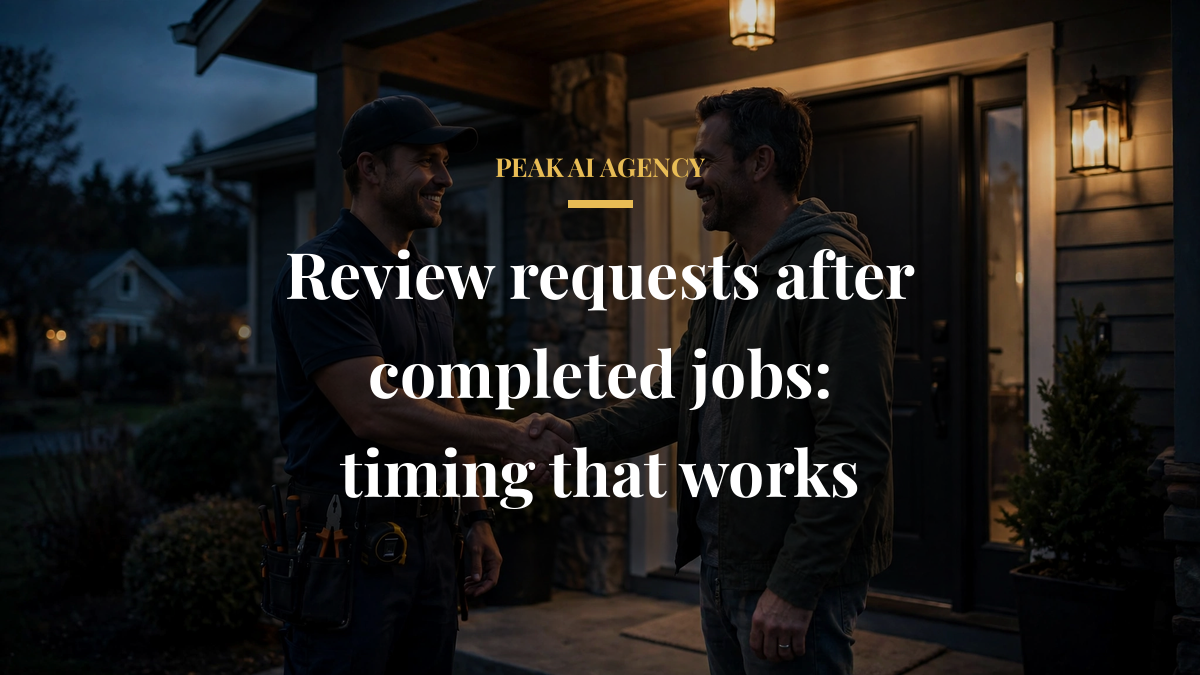
The tech just left. The water heater works, the invoice is paid, the homeowner is standing in a warm house feeling relieved. That feeling has a half-life of about a day. Ask for the review now and you get it. Ask next week and you get silence. Timing is most of the review game, and most home service shops leave it to chance.
Reviews are the closest thing to compound interest a local trades business has. Each one makes the next ad cheaper, the next quote easier to win, the next price objection softer. But the ask has to land in the right window, in the right channel, with the right amount of friction. Get any of those wrong and the happiest customer in the world still will not leave one.
The window: after the win, before the feeling fades
The best moment to ask is right after the job is done and the customer is satisfied. For most residential work, that means within a few hours of completion, and no later than the next day. The customer still remembers the tech’s name. The problem is freshly solved. The goodwill is at its peak.
There are exceptions worth building into the rule. For bigger projects, a kitchen remodel, a full system replacement, wait until the customer has lived with the result for a day or two. Asking the hour the crew leaves a three-day project feels premature. For emergency work, the relief is immediate and intense, so the same-day ask works well. The principle is the same in every case: ask while the customer is still thinking about how glad they are it is fixed.
One more timing rule: never ask before the job is truly done. A review request that arrives while the customer is still waiting on a part or a callback reads as tone-deaf, and the review it produces will say so.
The channel: text beats email, and it is not close
Homeowners live in their text messages. An email asking for a review competes with a hundred other emails and loses. A text arrives where the customer already is, and the link opens the review page in one tap. Every extra step between the ask and the review form cuts the response rate. Text plus direct link is the shortest path that exists.
The message itself should be short and specific. Name the tech. Name the job. Make the link obvious. “Hi Sarah, this is Mike from Apex Plumbing. Glad we got the water heater sorted today. If you have a minute, a Google review would mean a lot: [link].” That is the whole thing. No paragraph about how much reviews matter to small businesses. The customer knows.
Automate the ask, but keep the human checks
The manual version of this fails because it depends on the tech remembering, the office remembering, and the timing being right. All three fail regularly. The automated version triggers off the job completion in your field-service software or CRM: job marked complete, wait the configured window, send the text. It goes out for every job, at the right time, without anyone remembering.
But automation needs two guardrails. First, suppress the ask when the job went badly. If the customer complained, if there was a callback, if the invoice is disputed, the review request should not go out automatically. Route those to a human for service recovery instead. An automated ask after a bad job does not get you a review. It gets you a one-star review you prompted yourself.
Second, handle the non-responders with one gentle follow-up, not a campaign. A single reminder a few days later is reasonable. Three reminders is harassment. And never, ever offer payment or discounts for reviews. It violates the review platforms’ policies and it cheapens the reviews you do get.
What to do with the reviews once they arrive
Respond to every review, including the good ones. A short, specific reply, “Glad the new water heater is working well, Sarah,” signals to future customers that a real business stands behind the work. For bad reviews, respond quickly, acknowledge the specific complaint, and take the resolution offline. Future customers read your replies to bad reviews more carefully than the reviews themselves. They are evaluating how you handle problems, because they assume they might have one someday.
For more on the mechanics of asking well, see review generation timing after AI-handled calls and asking at the right moment. If you want the customer’s feedback in a more structured form, post-call surveys cover how to ask without annoying anyone.
The habit that compounds
None of this is complicated, which is why it is easy to dismiss. But run the numbers for your own shop: if you complete twenty jobs a week and ten percent of customers leave reviews, that is two reviews a week, a hundred a year. In most local markets, a hundred genuine reviews puts you in a different tier from every competitor who left it to chance. The ask takes thirty seconds to automate and a day to set up. The reviews keep working for years.

I write the agents that run on clinic phone lines and inboxes: the conversation engine and the booking logic behind them, plus the integrations with Pabau, Fresha and Phorest. Everything here comes out of systems we have actually shipped, not a content plan.


