AI Receptionist
AI Receptionist for Tree Services: Storm-Damage Calls Without the Chaos
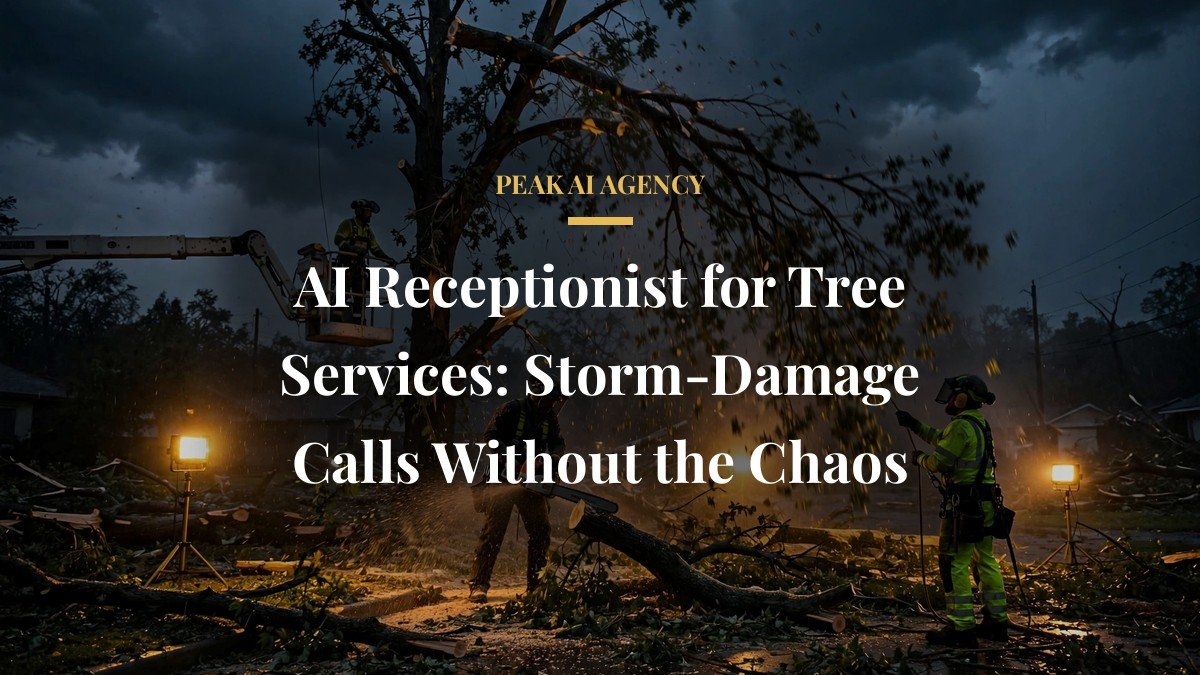
After a storm, the phone doesn’t ring. It explodes. A tree through a roof in one neighborhood, limbs on cars in another, a dozen “how soon can you get here” calls in an hour. You’re out with the crew, the chainsaws are running, and every call you miss is a homeowner calling the next tree service on the list. Storm work is the most profitable work in tree service and the hardest to capture, because the surge hits exactly when you’re least able to answer.
An AI receptionist for tree services is built for this pattern: it answers every call during the surge, triages by urgency, books the estimates in priority order, and keeps the routine business running while the storm work floods in.
Storm triage is the whole game
Not every storm call is equal. A tree on a house with a hole in the roof is an emergency. A tree on a car is urgent. Limbs in the yard that can wait a week are routine. When you’re getting dozens of calls, the order you work them in determines both your revenue and your reputation. The wrong order means the emergency waits while you quote a cleanup.
An AI receptionist triages every call with the questions your best dispatcher would ask: what happened, is anyone hurt, is there structural damage, is the tree still a hazard, what’s the address, can you send photos. Emergencies get dispatched to you immediately with the details and photos already collected. Urgent jobs get booked into the emergency queue. Routine cleanups get scheduled for after the surge. The caller with a tree on their roof hears “we’re sending someone” instead of voicemail.
The estimate backlog
After the emergencies are handled, there’s the estimate backlog: dozens of homeowners who want quotes for removals, trimming, and cleanup. This is where tree services make their quarter, and it’s where most of them lose jobs to slow response. The AI books estimates directly into your calendar, prioritized by the triage, with the job details and photos attached. Your estimator’s day is planned before the storm clears.
Photo intake matters more in tree work than almost any other trade. A photo of the tree, the damage, and the access tells your estimator whether it’s a half-day job or a crane job. The AI should prompt every caller to text photos and attach them to the ticket. Estimates get faster and more accurate, and you stop rolling a truck to jobs you can’t price without seeing.
Routine work between storms
Storms are the spikes, but the base business is trimming, removals, stump grinding, and lot clearing. These callers are planners, not panickers. They want a quote, they want to know about your insurance (tree work near houses makes everyone nervous), and they want scheduling that works around their week. The AI handles these like any good office: answers the insurance question with your actual coverage, books the estimate, follows up on the quote.
The seasonal rhythm matters. Spring and fall are busy for trimming. Winter is slower in cold climates. The AI scales with the volume and keeps the follow-up consistent in the slow months, when every booked job counts more.
Safety and the calls you must handle personally
Tree work has a safety dimension most trades don’t. A caller reporting a tree on power lines, a leaning tree over a playground, or someone injured needs a specific response: stay clear, call emergency services or the utility, and then you get alerted immediately. Your AI receptionist needs these protocols configured explicitly and tested. This isn’t a nice-to-have. Get the escalation rules in writing from your provider and verify them with test calls before storm season.
What to check before you buy
- Surge capacity. Ask how many simultaneous calls it handles. Storm surge is the use case. If it handles five at a time and you get fifty, it fails exactly when you need it.
- Triage configuration. The emergency/urgent/routine sorting must match your operation. Make sure you can define the questions and the escalation rules, not accept a generic template.
- Photo and video intake. Callers should be able to text photos that attach to the ticket automatically. This is non-negotiable for tree work.
- Crew dispatch integration. Emergency tickets should reach whoever is on call immediately, by phone or text, with the full details. Ask how the alert works and test it.
- Insurance answers. Callers will ask about your liability coverage and workers’ comp. The AI needs your real answers, stated confidently.
Tree service revenue comes in waves, and the biggest wave comes with the worst phone conditions. The companies that capture storm work are the ones that answer every call and work the emergencies first. An AI receptionist gives you that capacity without hiring a dispatcher for the three storm weeks a year. The same seasonal surge logic applies to landscaping quotes and crew scheduling, covered in our guide for landscaping companies.

I write the agents that run on clinic phone lines and inboxes: the conversation engine and the booking logic behind them, plus the integrations with Pabau, Fresha and Phorest. Everything here comes out of systems we have actually shipped, not a content plan.