Buyer Guides
AI Receptionist for Owner-Operators Who Still Answer Their Own Phone
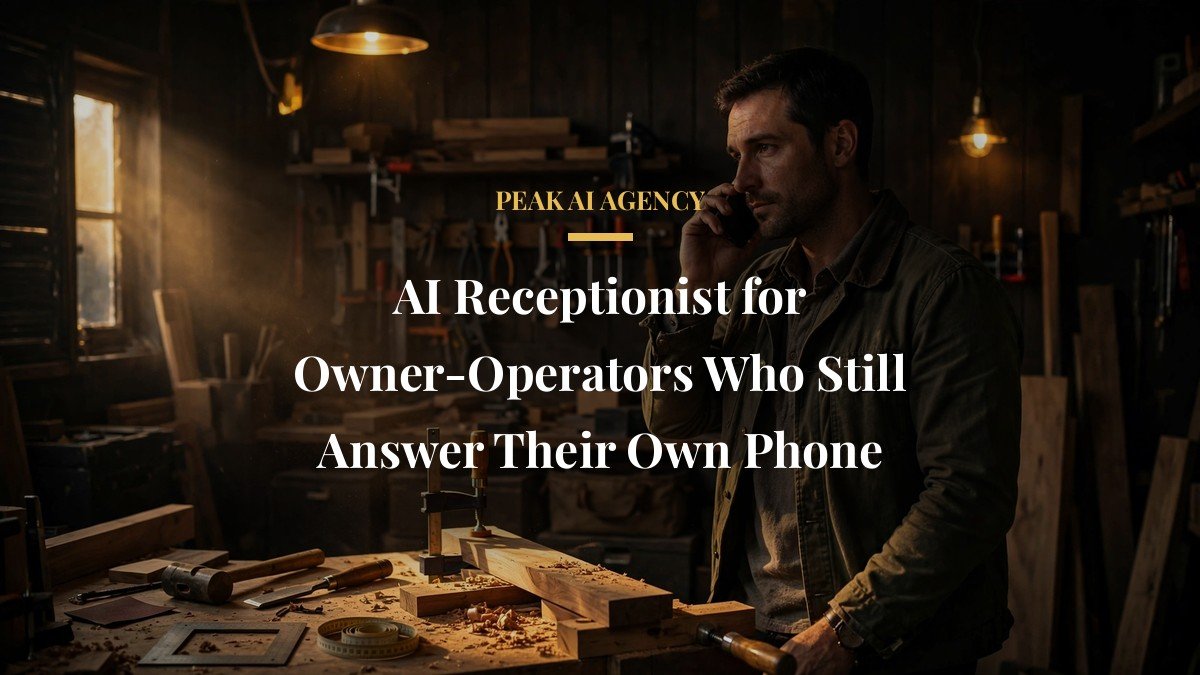
If you work alone, your phone is both your best salesperson and your worst interruption. It rings while your hands are busy, while you are driving, and while you are with the customer who is paying you today. Answer and you look distracted. Ignore it and the caller, who may be next month’s income, phones someone else.
Owner operators often assume an AI receptionist is for bigger businesses. Used in overflow mode, it fits a one person business well, because it only speaks when you cannot.
Overflow mode keeps you as the first voice
Set your phone to ring you first. If you do not pick up within a few rings, the call passes to the AI, which can book work, take quote details, and answer the questions callers ask most. Customers who reach you get you. Customers who would have reached voicemail get a conversation instead.
This arrangement answers the worry most solo operators raise, which is sounding impersonal. Most callers never meet the AI. The ones who do were heading for a voicemail greeting anyway, and a system that books them in is a clear improvement on a beep.
What to hand over first
Start with the calls that interrupt most and need you least: booking and rescheduling, opening hours and directions, price guidance for standard jobs, and quote intake using the questions you would ask yourself. Keep complaints, negotiations, and anything involving an unhappy customer routed to you as a message with an urgent flag, or a transfer when you are free.
After hours is the second handover. Evenings and weekends are when solo operators lose work silently, because callers rarely leave messages. Covering those hours with the AI, plus a missed call text back for anything it cannot complete, usually changes the numbers within the first month.
Cost questions for a one person business
Your call volume is low compared with a shop with staff, so pricing models matter. A plan built around a small included allowance suits you better than one priced for hundreds of calls. Watch setup fees and minimum terms closely, since a long contract is a heavier commitment when the whole business is you. The line by line method in our pricing quote guide applies, with one addition: price the plan against the jobs you know you missed last month, not against an abstract hourly rate.
Keeping control of your day
Ask for a summary after each AI handled call, delivered where you will actually read it, usually a text or an email you check between jobs. You need the caller’s name, what they wanted, what was booked or promised, and anything that needs you today. Review the summaries for a fortnight and fix the script where callers got stuck. Solo operators who skip this review end up distrusting the system for errors they could have corrected in week one. The setup checklist keeps that first review organised, and after it, most owners describe the change simply: the phone stopped running the day.

I write the agents that run on clinic phone lines and inboxes: the conversation engine and the booking logic behind them, plus the integrations with Pabau, Fresha and Phorest. Everything here comes out of systems we have actually shipped, not a content plan.


