Buyer Guides
AI Receptionist for Mobile Mechanics: Scheduling Driveway Visits and Travel Windows
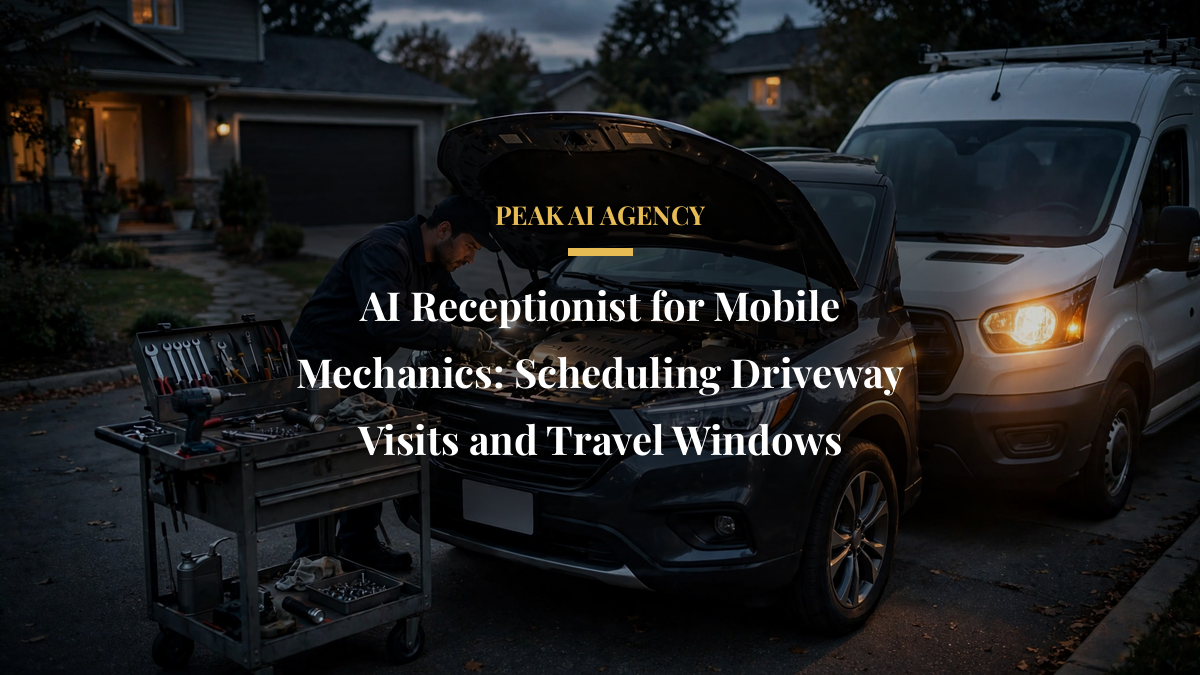
The office is the driver’s seat
A mobile mechanic’s whole business happens in the driveway: brakes at one house, an alternator at the next, a no-start in a parking lot. The phone is the business, and the mechanic answering it is the same person turning the wrench. Every call taken mid-job slows the job. Every call missed is a customer calling the next mobile mechanic on Google.
Mobile mechanics lose more calls than any other auto trade, because there is no front desk at all. The receptionist is the tech, the dispatcher, and the bookkeeper. An AI receptionist is the first front desk the business has ever had.
Booking driveway visits into real days
An AI receptionist answers in the first ring and takes the job the way a good dispatcher would: the symptom or requested service, the vehicle, the address, and whether the car starts and can wait or needs someone today. It quotes the service call fee and the price ranges you set for common jobs, books the visit into the day’s route, and sends the customer a text with the arrival window.
Travel windows are the hard part of mobile work. The receptionist books honestly: a morning window or an afternoon window, never a time the route cannot make. It texts the customer when the mechanic is running behind, because a driver stuck in traffic cannot text and a missed window without a text is a lost customer. The service booking pattern applies, with the travel window doing the work a bay slot does in a shop.
The questions mobile callers always ask
Do you come to my area. What is the service call fee. Can you do it in my driveway or do you need a garage. Will it take long. The receptionist answers from the script you set, including the service area boundaries. Callers outside the area get the honest answer and, if you want, the referral. The ZIP code routing pattern automates this: in-area books, out-of-area gets the polite no.
Parts questions come up constantly: can you get the part today, is it OEM or aftermarket, what is the warranty. The receptionist gives your standard answers and books the job for when the part arrives. It does not promise same-day parts it cannot get; it promises the real timeline.
Deposits and the no-show problem
Mobile mechanics drive to the customer, which makes a no-show an hour of driving wasted. The receptionist collects the service call fee or deposit at booking, confirms the address in writing, and sends the day-before reminder with the arrival window. No-shows drop hard when the customer has paid a deposit and has the window in a text.
What the mechanic does instead
With the phone handled, the mechanic works. Estimates go out by text. Follow-up calls for the quote-accepted customers happen automatically. The review request goes out after the job, while the customer is standing in the driveway looking at a car that runs. For owners weighing this against a human answering service, the call-volume decision framework lays out which calls need a person and which do not. For most mobile mechanics, the answer is: the AI takes the calls, the mechanic takes the jobs.

I write the agents that run on clinic phone lines and inboxes: the conversation engine and the booking logic behind them, plus the integrations with Pabau, Fresha and Phorest. Everything here comes out of systems we have actually shipped, not a content plan.