AI Receptionist
AI Receptionist for Electricians: Panel Upgrades, Rewires, and Quotes
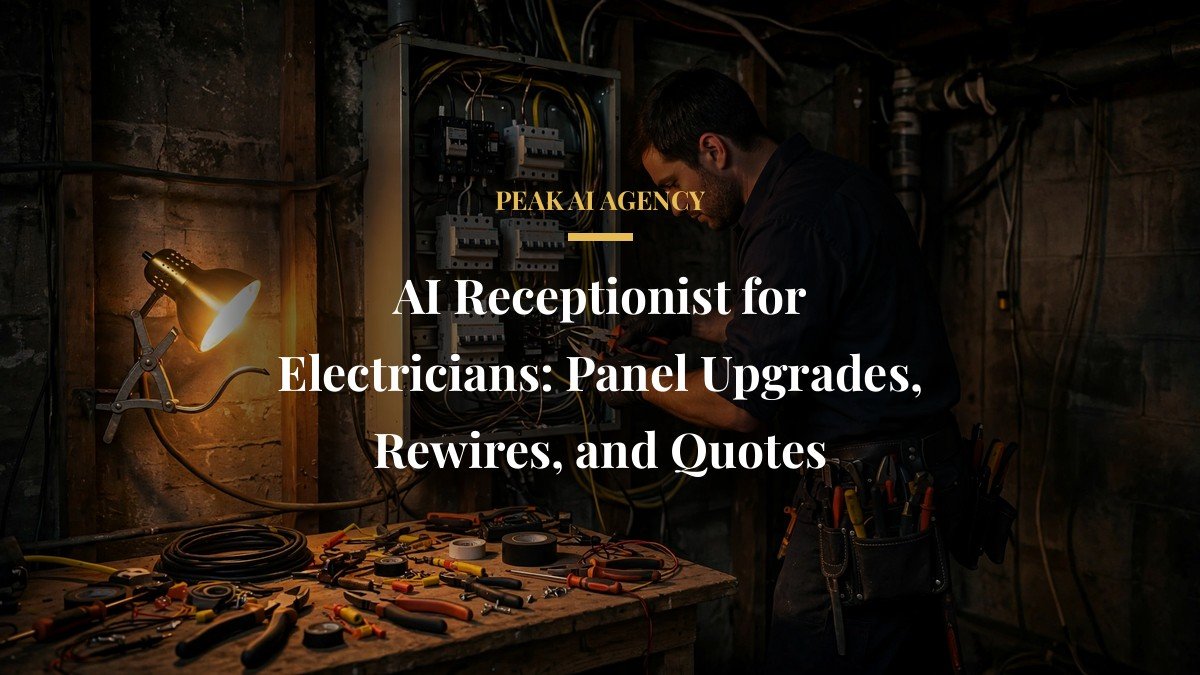
A panel upgrade call is not a lightbulb call. The homeowner is usually motivated by something with a deadline: a home sale with an inspection report, an insurance company demanding the old fuse box goes, a new EV charger that needs capacity, or a renovation that can’t proceed. They need a quote, they need it scheduled, and they called three electricians. The one who responds first usually gets the job.
Panel upgrades and rewires are the best jobs in residential electrical: high ticket, clear scope, scheduled work instead of emergency chaos. They’re also the jobs most often lost to voicemail, because the estimator is on a ladder and the office is whoever picks up between jobs. An AI receptionist for electricians makes sure the quote request gets captured, qualified, and booked while the caller is still deciding.
Why these calls are different from outage calls
Outage and emergency calls are about speed. Panel upgrade calls are about trust and scheduling. The caller has questions: how long does it take, will the power be off all day, do you handle the permit and the utility coordination, what does it cost. They might need the work done before a closing date. They might be comparing your answer to two competitors.
An AI receptionist handles this like a good office manager. It explains the process in plain terms, collects the details that matter for the quote (panel age, amperage, fuse or breaker, reason for the upgrade, timeline), checks the estimator’s calendar, and books the site visit. It doesn’t quote the job over the phone. It books the visit that leads to the quote, which is the actual conversion event.
Speed to lead on high-ticket work
On a $150 service call, a slow callback costs you $150. On a panel upgrade, a slow callback costs you the best job of the week. Homeowners getting major electrical work are anxious and comparison shopping. If you call back in four hours and the competitor called back in twenty minutes and already booked the estimate, you’ve lost before you started.
The AI answers on the first ring, every time, including evenings when homeowners do their research and weekends when they’re home to think about the project. It books the estimate into your calendar on the spot. By the time you see the ticket, the appointment exists. There’s no callback queue to work through on Monday morning.
Qualifying the tire-kickers
Not every panel inquiry is real. Some callers want a phone quote you’ll never give, some are price shopping with no timeline, some have a 60-amp fuse box in a rental and just want to know “roughly.” The AI asks the qualifying questions your estimator would ask: what’s driving the upgrade, what’s the timeline, is there a closing or inspection deadline, who makes the decision.
This protects your estimator’s calendar. Site visits for real jobs get booked. Vague inquiries get a callback slot or an email with your process and ballpark ranges, per your policy. You stop driving across town to look at panels for people who were never going to hire anyone.
Permits, utilities, and inspections
Panel upgrades involve the utility company and the permit office, and homeowners know just enough to worry about it. The AI should be able to explain your process: yes, you pull the permit; yes, you coordinate the disconnect and reconnect with the utility; here’s roughly how scheduling works. These answers, given confidently and consistently, are what separate a professional shop from a guy with a van in the caller’s mind.
What to check before you buy
- Estimate booking, not phone quotes. Make sure the AI is configured to book site visits, not to improvise pricing. A wrong number quoted by an AI is worse than no answer.
- Calendar integration with your estimator. It needs real availability, travel buffers between appointments, and the ability to distinguish estimate slots from job slots.
- Photo intake. Ask whether callers can text photos of their panel. A photo of the existing panel before the site visit lets your estimator arrive prepared and sometimes lets you give a tighter range on the call.
- After-hours behavior. Homeowners research electrical projects at night. The AI should capture and book those evening inquiries, not just take a message for the morning.
- License and insurance questions. Callers ask if you’re licensed and insured. The AI should answer with your actual license number and coverage, not a vague yes.
Panel upgrades and rewires are won on responsiveness and lost on voicemail. The work itself is skilled and profitable. The phone handling around it should be too. An AI receptionist gives every high-ticket inquiry an immediate, competent response and a booked estimate, which is the closest thing to a guarantee in this business. For the emergency side of the trade, see our guides to electrician estimates and outage calls and AI receptionists for electricians.

I write the agents that run on clinic phone lines and inboxes: the conversation engine and the booking logic behind them, plus the integrations with Pabau, Fresha and Phorest. Everything here comes out of systems we have actually shipped, not a content plan.